Gripyaxa Tonstud.io Berlin · References
References and practical areas of application
Most of the projects we handle fall into a few clearly recognizable types. This page shows how journalistic interviews, corporate TV, podcasts, documentaries, and voice recordings are handled with us, so you can quickly categorize your case. We only mention specific names if we have received authorization.
Five areas of application to identify your project
View servicesJournalistic Interviews
Original sound for editorial teams, broadcasts, or articles. Multiple interviewees in one day, delivery the same evening.
Daily updatedCorporate TV and Statements
Statement from management or contribution for internal communication. Set background, quiet setup, consistent across contributions.
RecurringPodcast and Audio Formats
Extended interview recording with high acoustic requirements. For series, we plan a fixed setup that doesn't need to be rebuilt every time.
Series formatDocumentaries and long conversations
Atmosphere counts just as much as the original sound. We plan for breaks, ventilation, and handling of sensitive topics.
Over several hoursVoice recordings for explanatory formats
Explanatory film, commentary, or audio version, often with a single speaker and finished script. We plan multilingual versions as separate sessions.
Speaker boothJournalistic Interviews
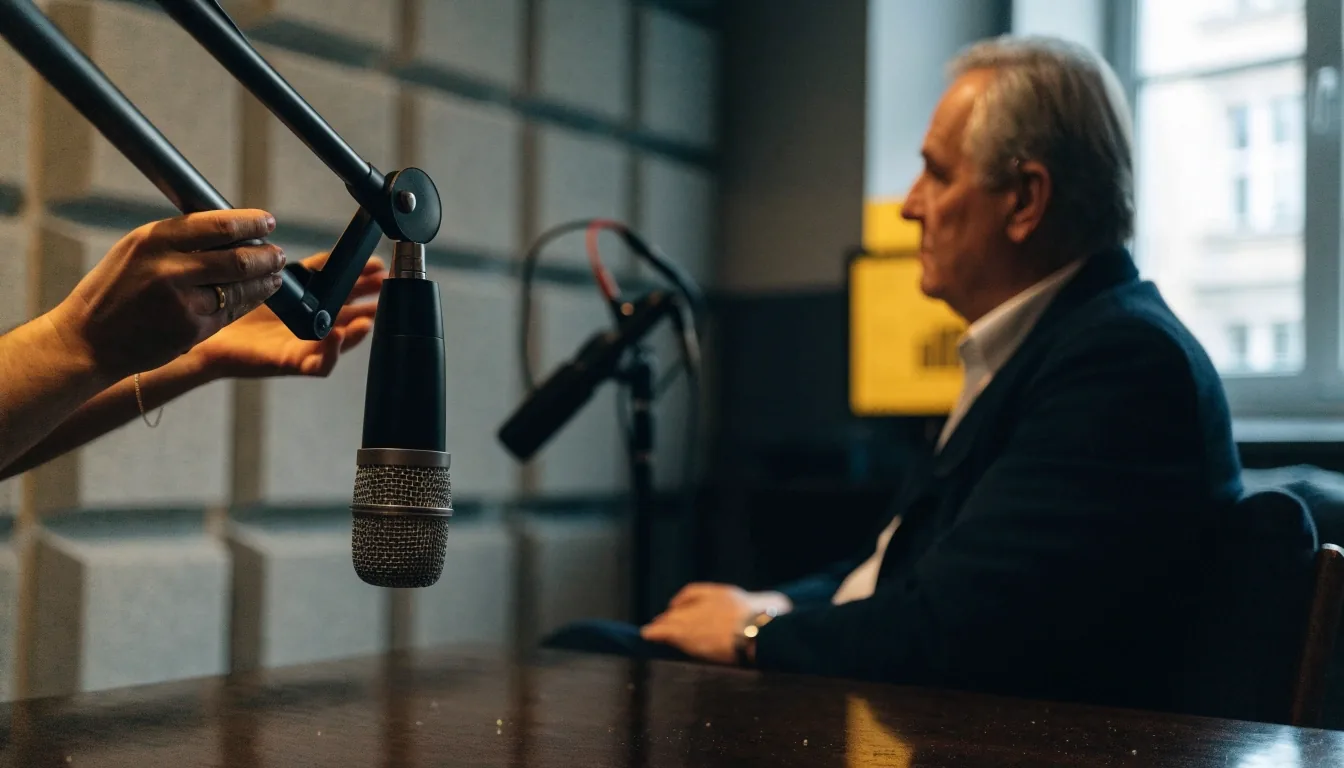
A journalistic interview is a conversation with an audience—not in the room, but later in the piece. It requires clean original sound, clear microphone separation, and often a quick turnaround because the piece is airing the same day. For such projects, it is essential that the recording does not need to be repaired.
If you are planning multiple interviewees in one day, we will determine the order in advance. This makes changeover time predictable, and no one is left waiting in the hallway while the recording is running.
Corporate TV and Statements
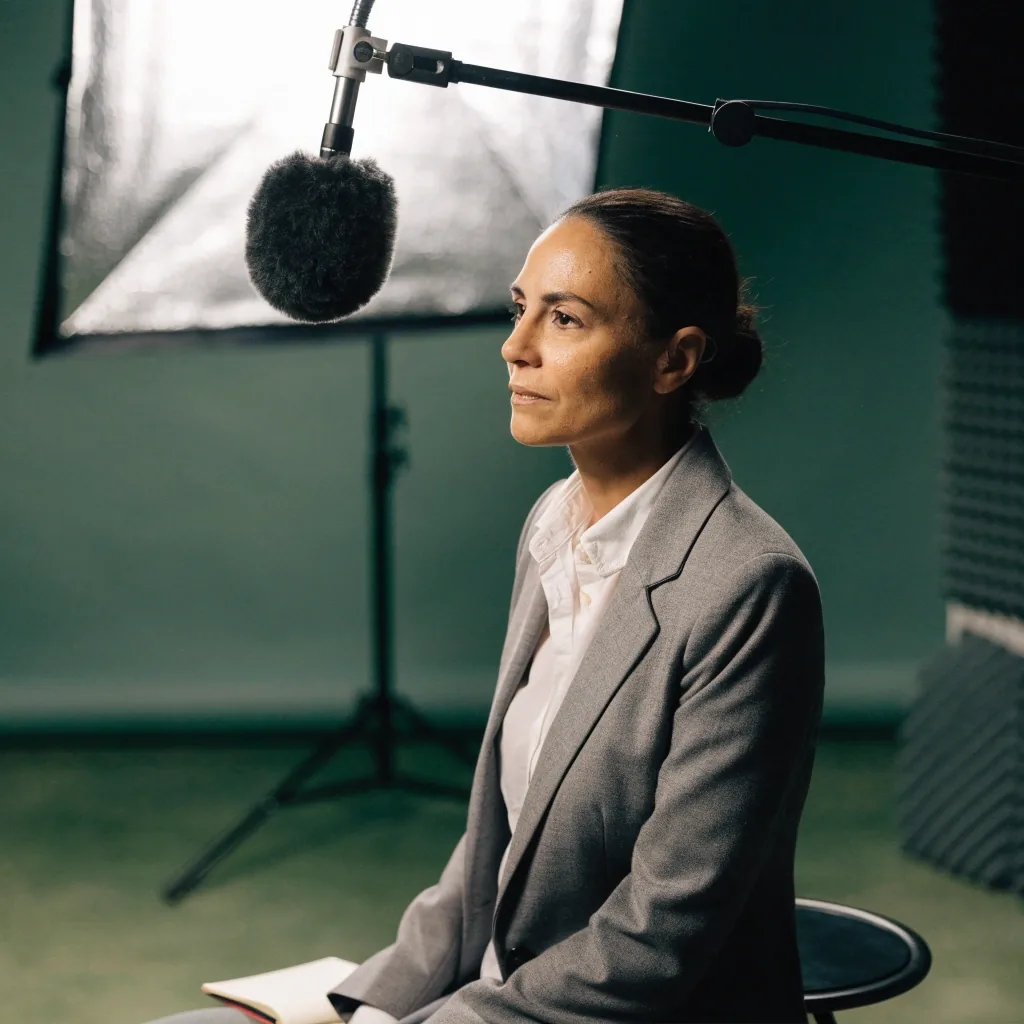
A management statement or a piece for internal communication is technically closer to TV than to a podcast. The background is often set, and the image carries the message. This involves a quiet setup, clean lines, and sound that passes editorial review without discussion.
For companies with regular communication, a recurring setup is worthwhile. The image remains consistent across contributions, and the ongoing effort per shoot decreases because the lighting and microphone positions are already known.
Podcast and Audio Formats
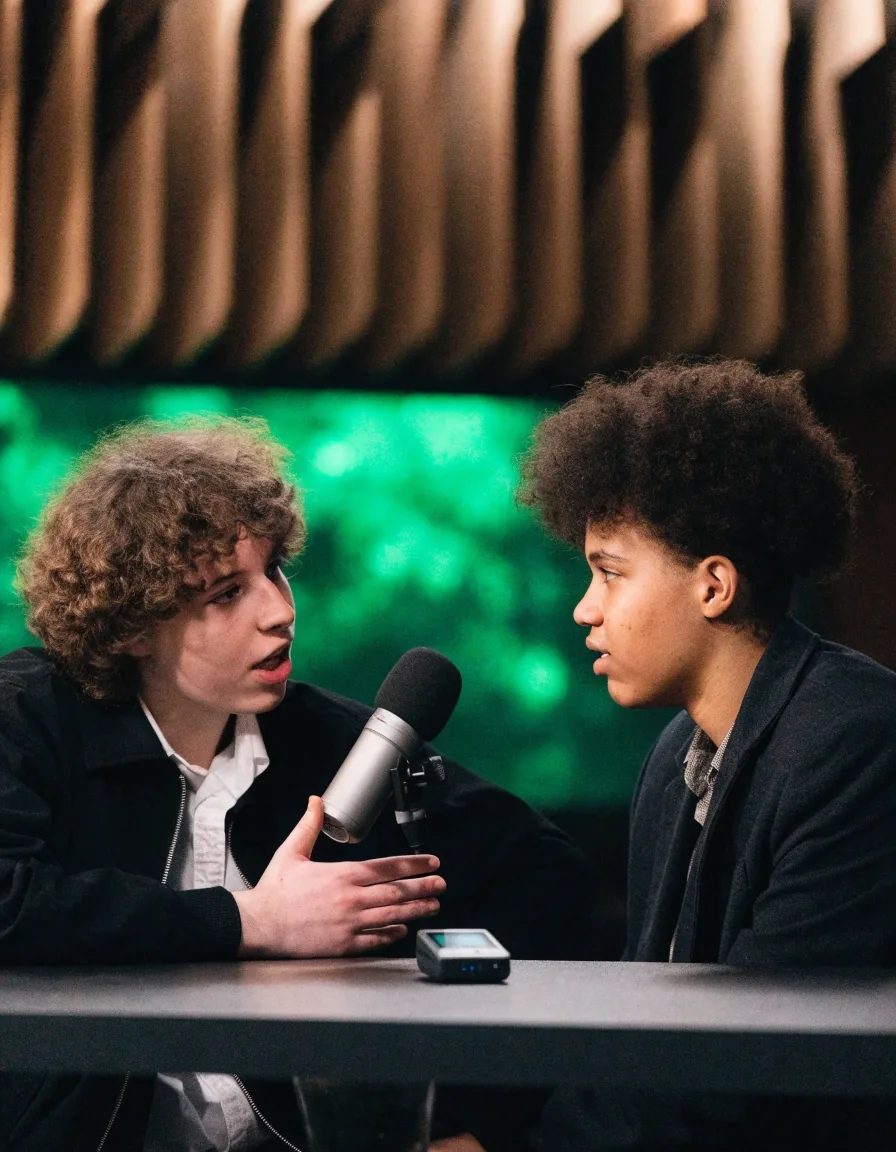
Podcasts are handled as extended interview recordings. The format is usually calm, the episodes are long, and the acoustic requirements are high. For recurring productions, we plan a fixed setup that does not need to be rebuilt each time.
If the format is intended to be video-ready later, please let us know early. Camera and lighting require additional space, which affects seating arrangements and interview distance.
Read production workflow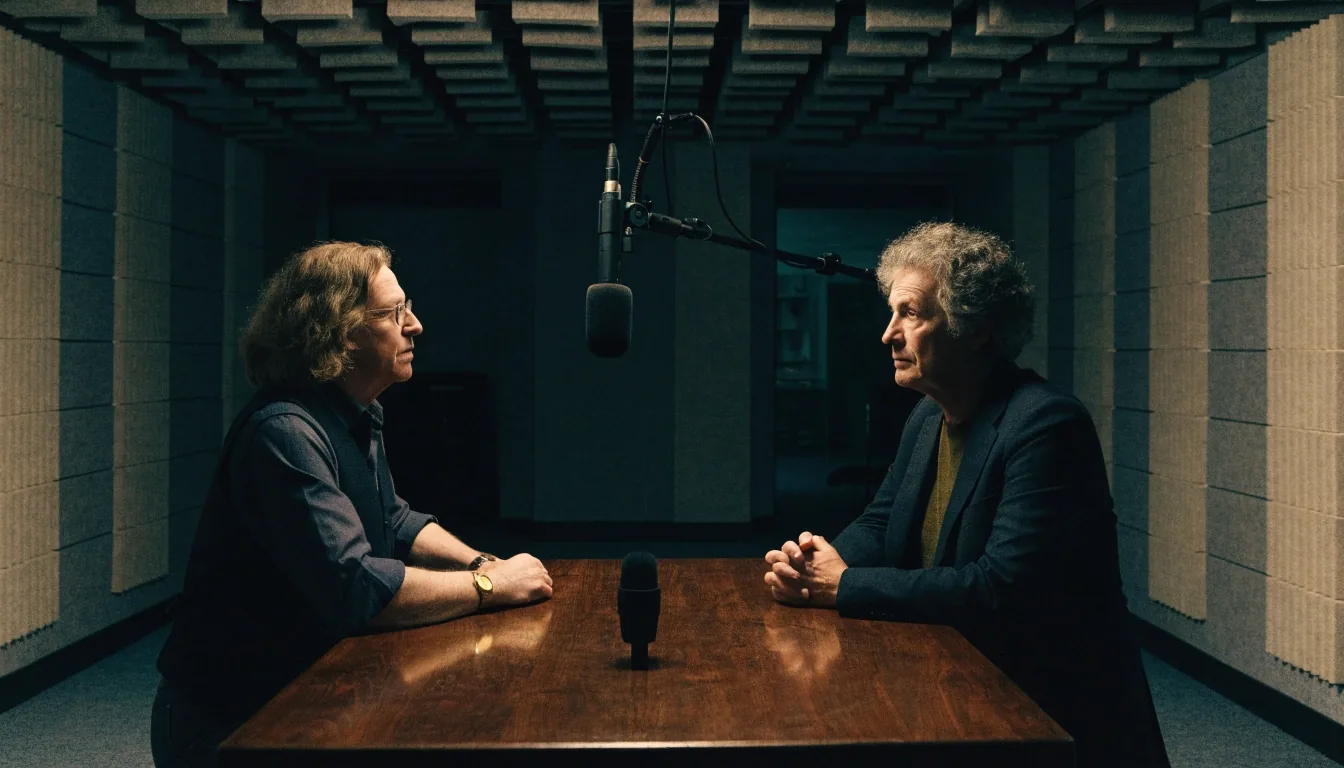
Documentaries and longer conversation formats
In documentaries, atmosphere counts just as much as the original sound. A quiet room with controlled acoustics allows for conversations that are not constantly interrupted. For productions lasting several hours, we plan for breaks and ventilation so that the voice does not suffer from dry air.
For sensitive topics, the handling process is also a separate point. Who speaks, when there is a break, and when the recording truly ends are things we discuss before the first minute, not in between.
Voice recordings and live formats
Two areas that could not be more different, but both are typical for us: the quiet voice recording alone at the speaker booth and the live format with a remote guest, where the sound must work in both directions.
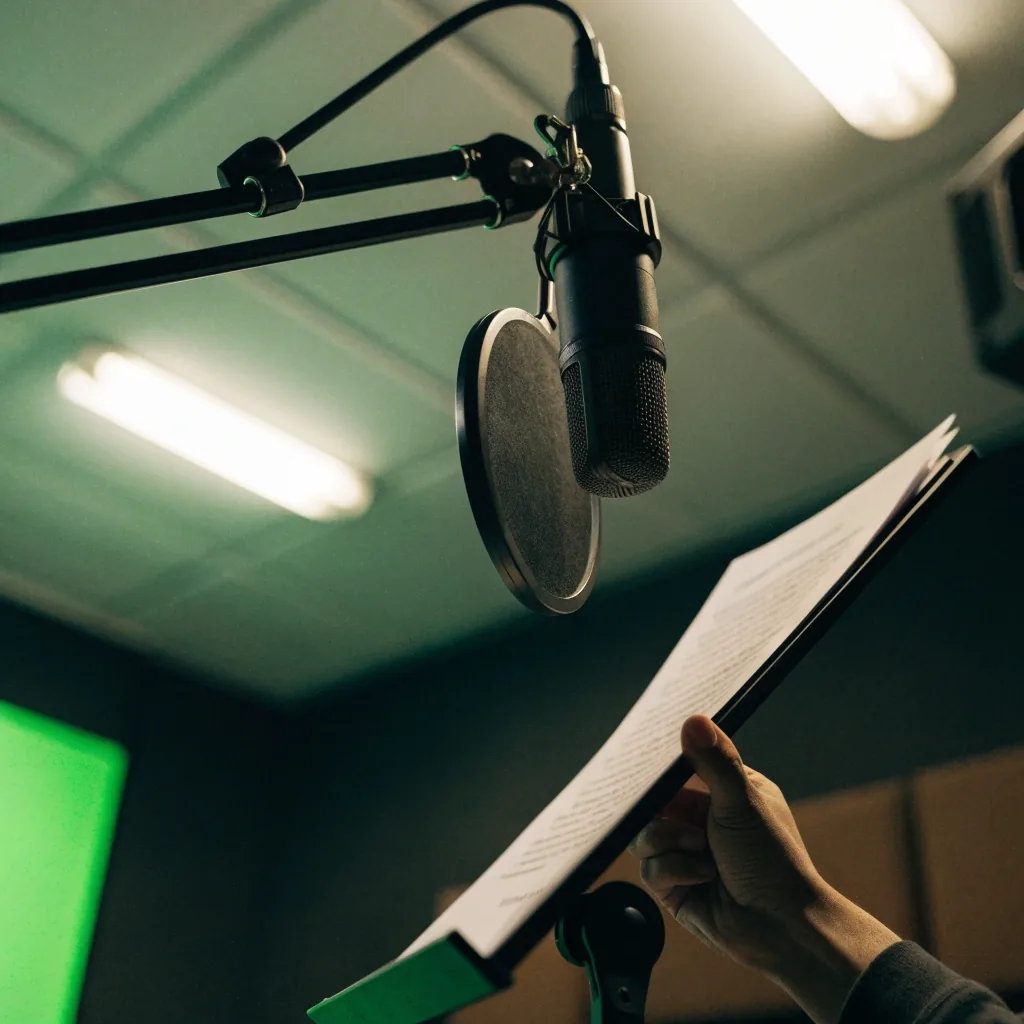
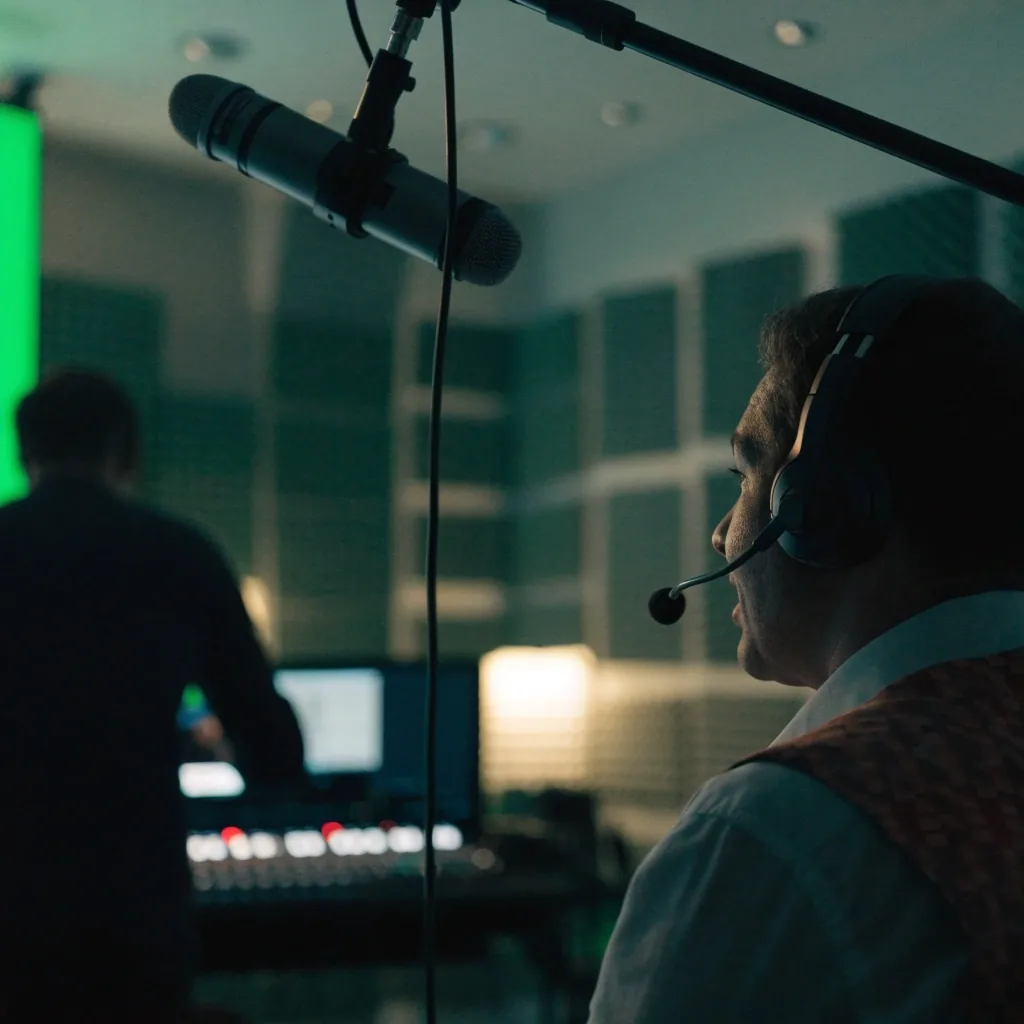
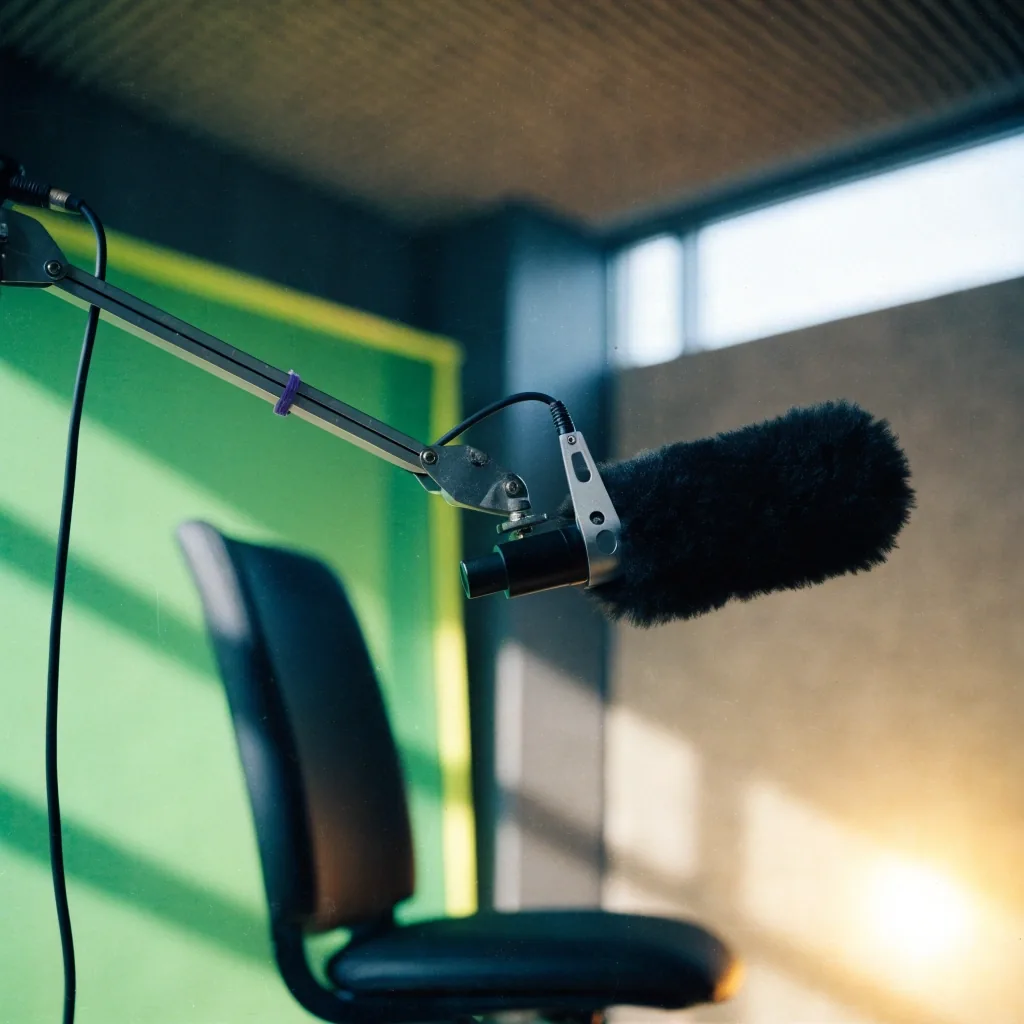
Which capsule and which setup are appropriate depends on the format and room size. You can find the details of our technology on the pageStudio & Technology, and we explain the booking process underProduction Workflow.
Areas of application that are often booked in the wrong place
Some projects regularly appear at recording studios even though a different environment would be more suitable. A podcast with a live audience requires more space than an interview setup. A corporate film with outdoor scenes requires an outdoor production. If your project falls into one of these categories, we will let you know upon inquiry instead of discovering on the day of the shoot that the room is too small.
How to classify your case
If you are unsure which area of application is suitable, describe your project in two sentences. State who is speaking, whether video is included, and in what format the output will be. From these three pieces of information, we can usually deduce whether an interview setup, a set, or a hybrid solution is appropriate.
Get in touchFrequently asked questions about our references
Three questions we encounter most often regarding reference inquiries. If your question is missing, please write to us at the address below.
Can you name reference projects?
open
close
If we have the client's approval, we will state the project type and scope. In many cases, naming the client is not desired, which is why the focus here is on the project type rather than the client's name.
Do you also work with first-time producers?
open
close
Yes. A large portion of inquiries comes from teams producing an interview or podcast for the first time. The beginner workflow is designed for these cases, where we handle the technical side and you focus on the conversation.
Is the room suitable for podcasts with an audience?
open
close
For small groups, yes; for a live audience, more space would be needed. If your production involves an on-site audience, please mention it during your inquiry so we can check if the setup is realistically feasible or if a larger location would be better.
Your project, your format, your schedule
If one of the areas of application fits your project, a short inquiry with the three details is sufficient: who is speaking, whether video is included, and how the output will be distributed. We will then check the setup, time frame, and logistics and get back to you with a proposal for your interview recording or TV production in Berlin.
Gripyaxa Tonstudio Berlin · Kastanienallee 42, 10435 Berlin · Monday to Friday, 09:00–18:00 ·cadendunnvfoc@hotmail.com