Recording studio Berlin for interview recordings and TV productions
Kastanienallee 42 · 10435 Berlin
Mon–Fri 09:00 AM – 06:00 PM
+49 30 12345678
Interview recording · Original sound · Voice recording · GDPR-compliant processing
What is available for you in Prenzlauer Berg
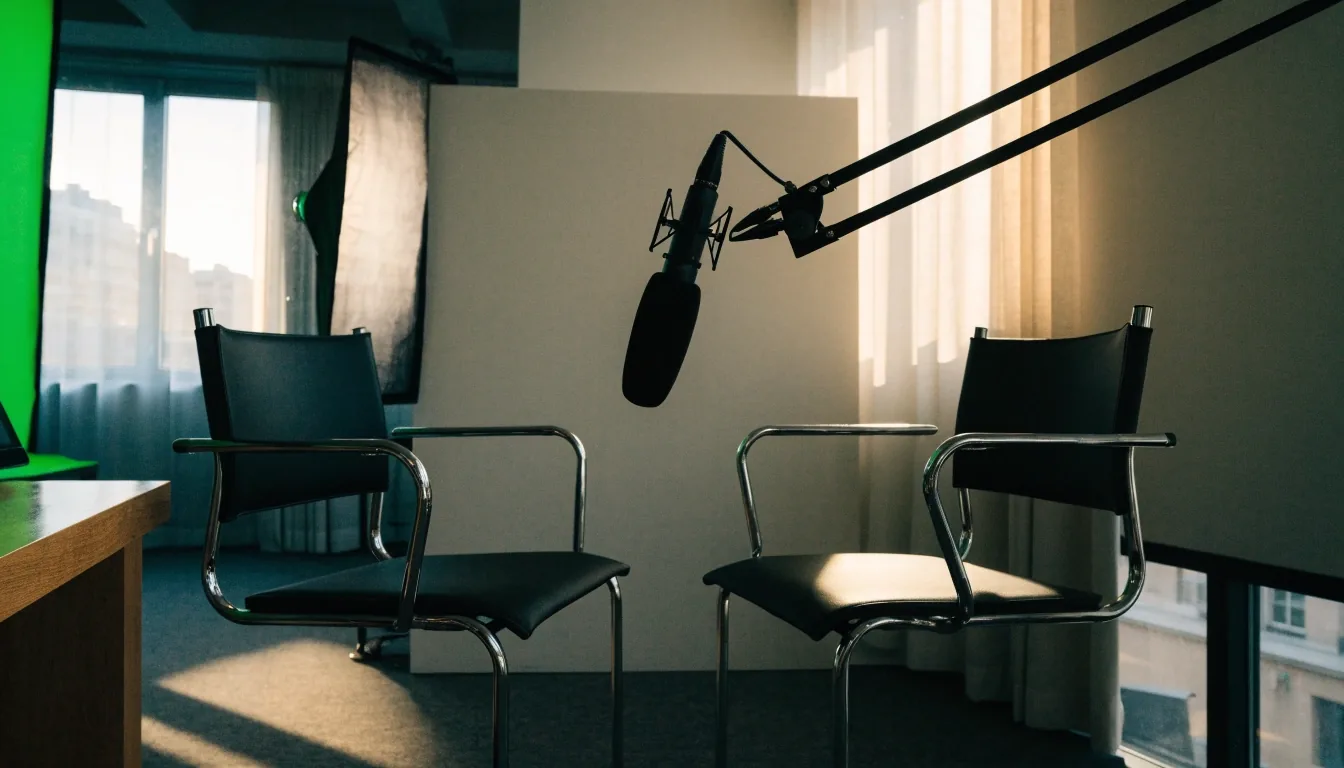
Our recording room is built as a voice room, not a multi-purpose space. The spoken word is at the center: interview recording, original sound, voice recording, voice-over. For video productions, camera and lighting setups are positioned so that a guest can sit down without the crew needing to rearrange anything.
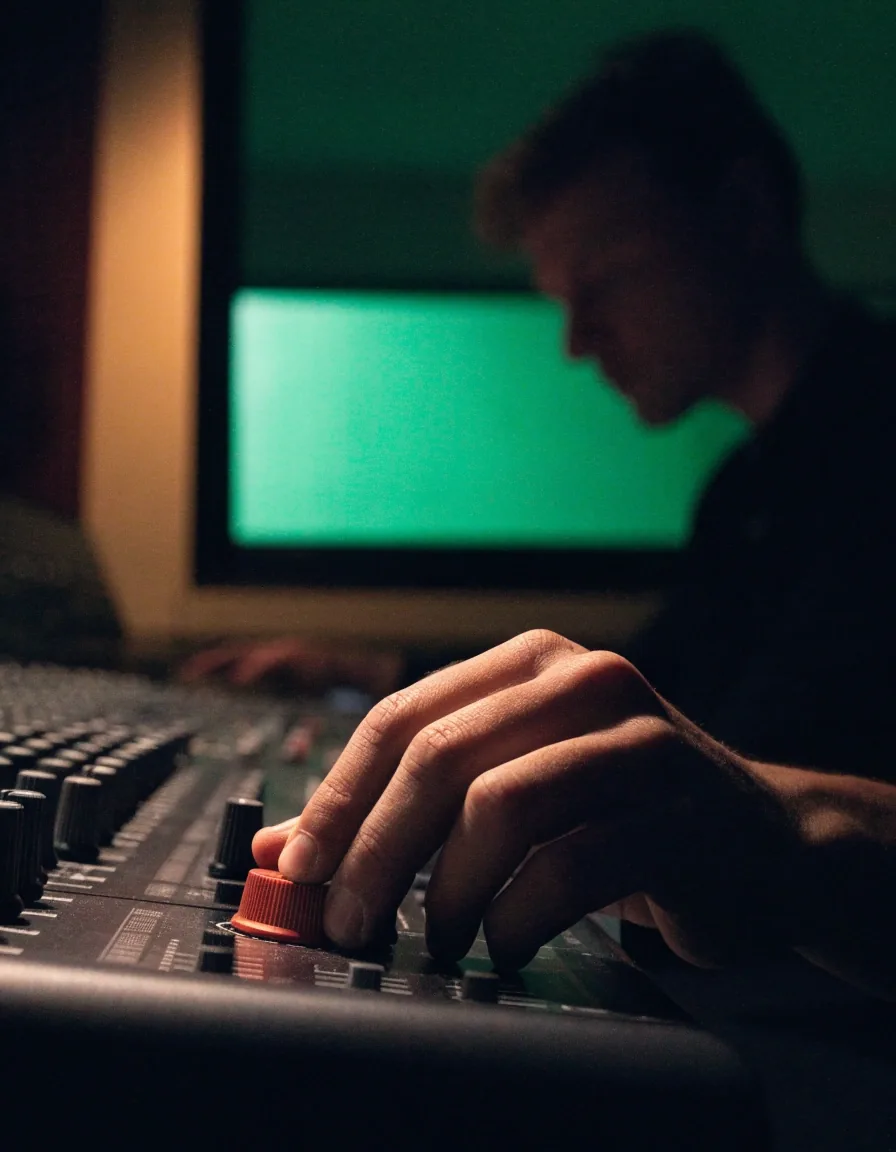
The control room is separated from the recording room, allowing editorial and technical staff to listen and record without breathing into the microphone. Those traveling from the surrounding area will find fixed contact persons at the location and short directions.
Recording room
Built for speech: controlled reflections, separable speaker and interviewer positions, air conditioning without hum in the headphones.
Control room
Separated from the recording room. Editorial and technical staff listen and record without breathing into the microphone.
Video setup
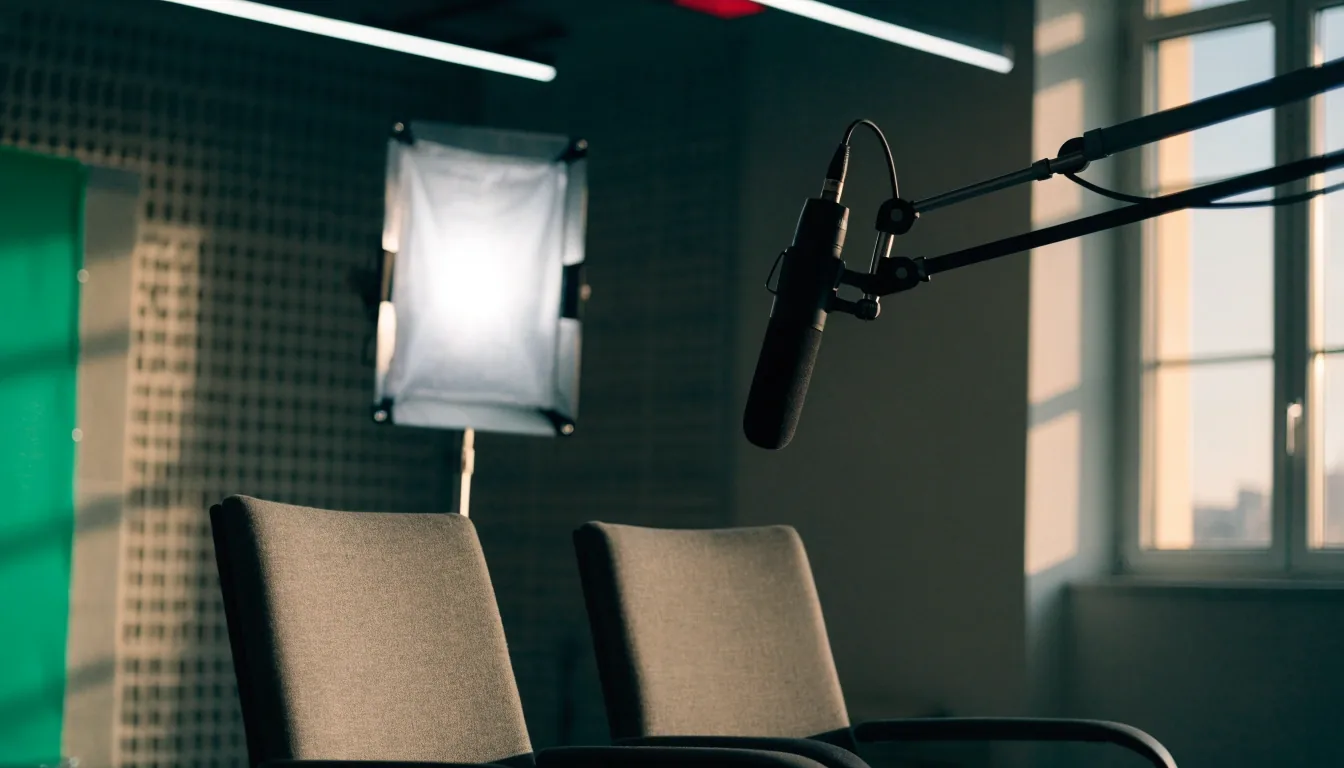
Camera and lighting positions are prepared so that a guest can sit down without the crew rearranging them before the take.
Arrival
Two minutes from the tram stop, fixed contact persons on-site, parking options for production vehicles nearby.
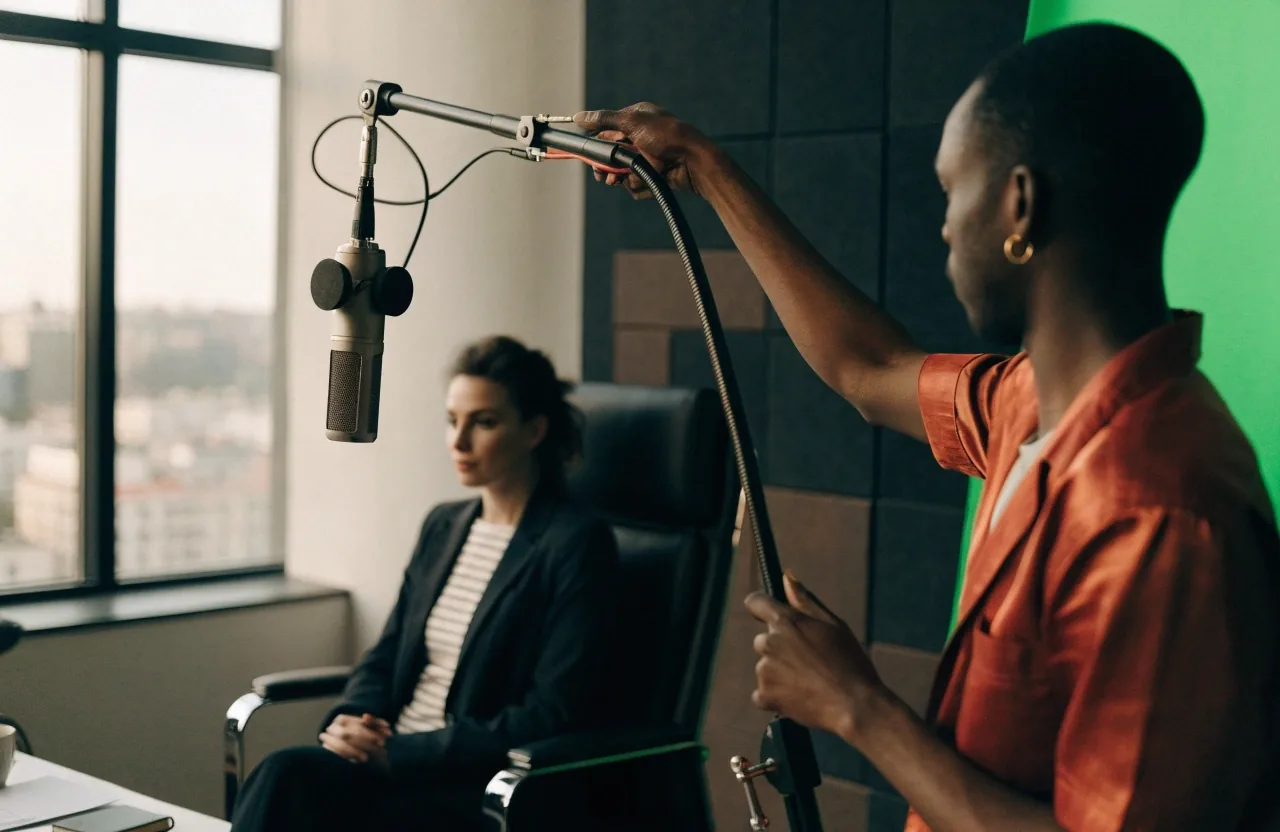
Interview recording with broadcast-ready original sound
The crucial point with interviews is not the microphone alone, but the room in front of it. Reverberation, street noise, and the hum of an air conditioner are the reasons why original sounds have to be repaired later.
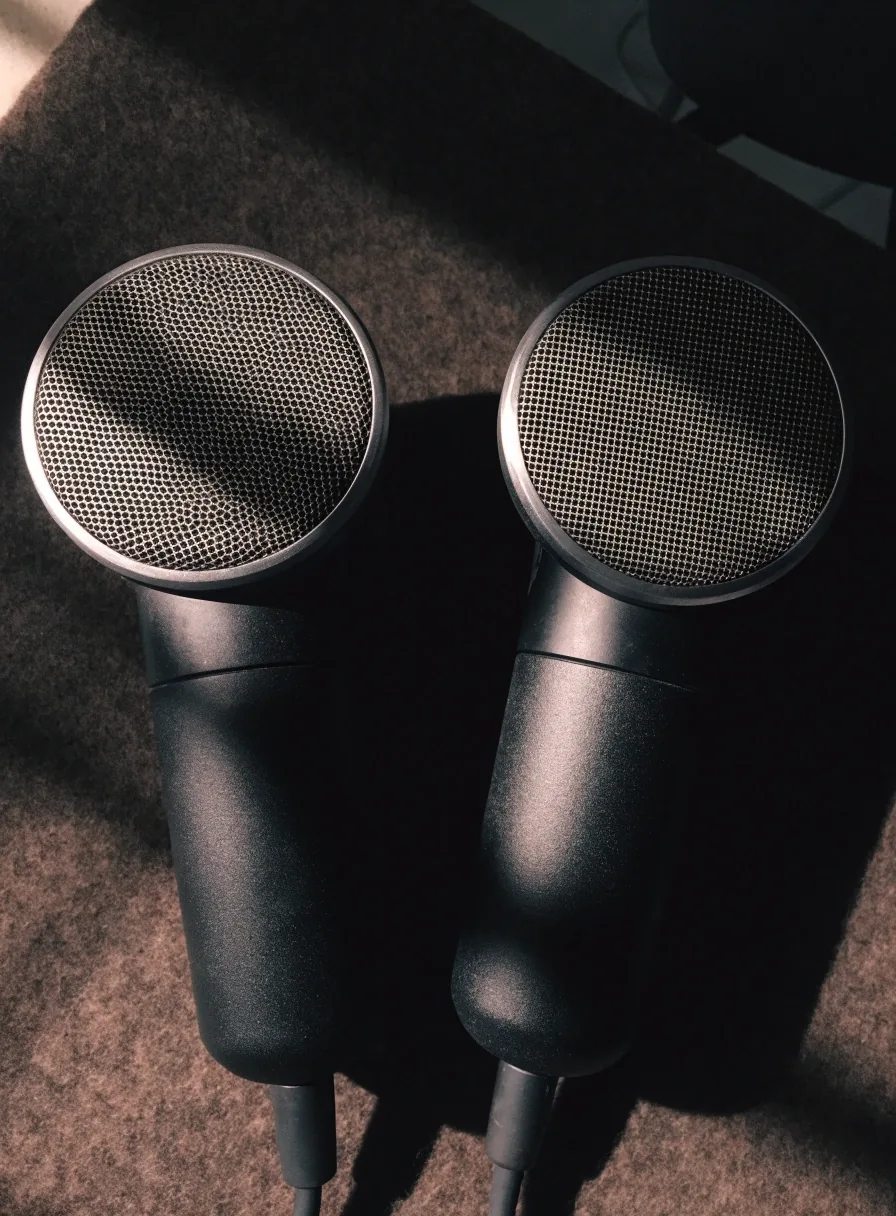
We work with absorbent surfaces, controlled ventilation, and a setup that cleanly separates speaker and interviewer. You can work with one microphone or two separate channels, depending on whether you want to edit the interviewer and guest separately later.
Ask every studio inquiry if there is a reverberation measurement value and if the ventilation continues to run during recording. A studio that does not have a clear answer to these two questions is a risk for broadcast-ready speech.
TV productions and statements on camera
For TV segments, corporate films, and statements, we set up the equipment so that image and sound match. Camera position, background, lighting, and sound are coordinated before the shoot, not during.
If you want to work with a green screen, let us know in advance so the background is ready. For productions with multiple guests, we plan the seating arrangement in advance so that sightlines and microphone distances are correct.
A podcast studio is not automatically a TV-ready setup. Podcast rooms are often visually designed and acoustically soft, but lack the space, light, or a clean background for camera productions. Conversely, a TV set is not automatically optimized for speech. If your format needs both, mention it in your inquiry, and we will check which setup fits better.
Live video and hybrid production without improvisation
More and more editorial teams are filming interviews that go live or are connected to a hybrid conference simultaneously. This is feasible, but it requires a different workflow than a pure recording. We clarify in advance whether a guest will be dialed in, how the sound goes back into the conference, and who does what in case of a failure. Anyone who has experienced a dialed-in guest pulling away all the sound knows why these ten minutes of preparation are important.
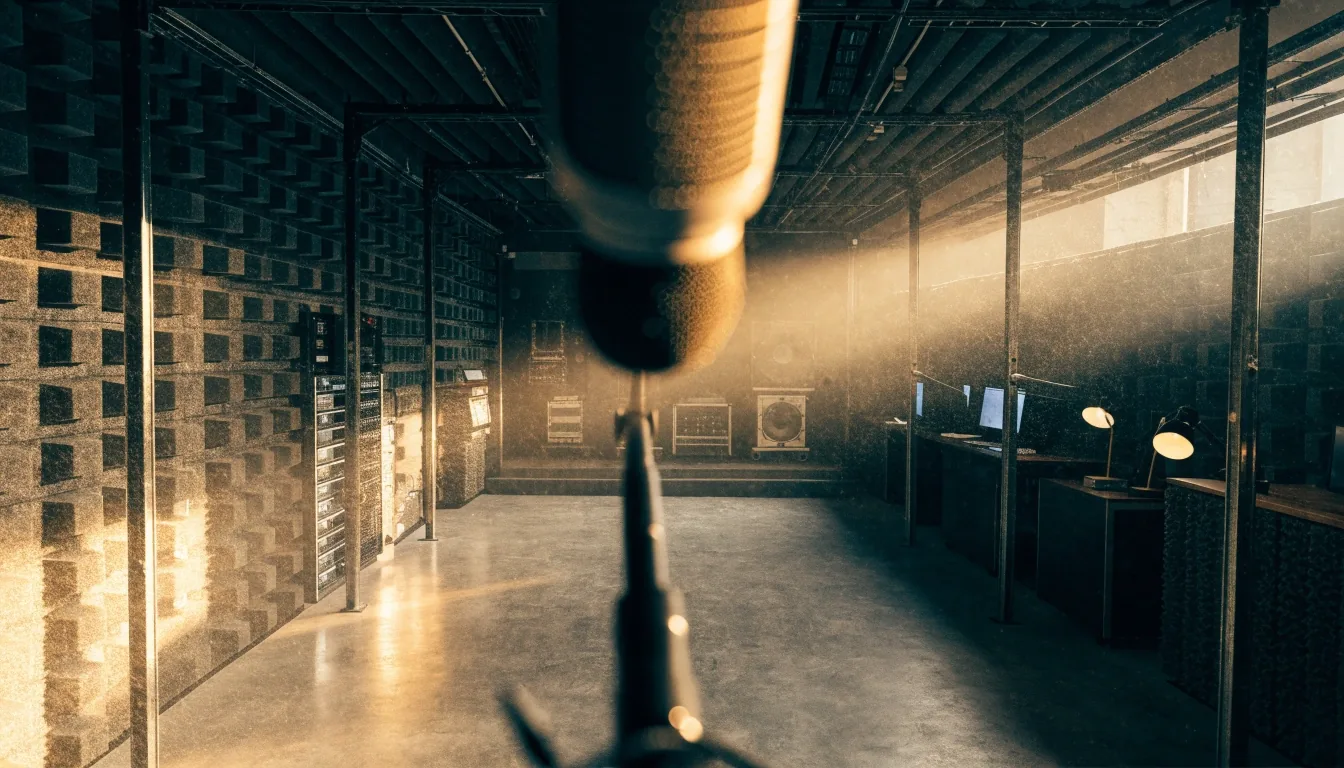
GDPR-compliant processing from inquiry to delivery
Interviews involve personal data: name, voice, recording, perhaps a sensitive topic. That is why we treat the processing as part of the production, not as an appendix. Recordings do not lie around openly on any computer here; only the people working on the project have access.
Upon request, we will sign a data processing agreement before the first file is created. This also applies to guests who need to sign a release form.
Access
Only the people working on the project have access to the recordings.
DPA
Signed upon request before the first file is created — if necessary, even before the shooting date.
Releases
We also keep the process clean for guests who need to sign a release.
Handover
You receive the material in a format that can be directly imported into the edit.
Who shoots with us
The difference lies not in the technology, but in how much preparation a project needs. That is why we ask about the project type, duration, and visual requirements for every inquiry before we commit to a setup.
Newsrooms
An original sound for the evening, spoken quickly, without room problems in the background. The spoken word is set here, not improvised.
Original sound
Companies
Recording a statement from management where image and sound match and the recording can go into communication without post-processing.
Statement
Podcast-Teams
Ein bestehendes Audio-Format um Bild erweitern — mit einem Aufbau, der beides zugleich trägt statt nacheinander.
Formatwechsel
Dokumentarfilm
Eine ruhige Gesprächssituation statt einer lauten Location, in der ein Gast offen sprechen kann.
Gespräch
Raumakustik: woran Sie einen ruhigen Raum erkennen
Ein ruhiger Raum ist nicht der, in dem nichts zu hören ist, sondern der, in dem Reflexionen kontrolliert sind. Wenn Sie mit einem Gast sprechen, hören Sie Ihre eigene Stimme nur gedämpft zurück. Wenn die Klimaanlage läuft, hört man sie nicht im Kopfhörer.
Fragen Sie bei jeder Studioanfrage nach, ob es einen Nachhall-Messwert gibt und ob die Belüftung im Aufnahmebetrieb weiterläuft. Diese zwei Fragen trennen einen Sprachraum von einer umgebauten Mehrzweckfläche schneller als jede Geräteliste.
Anfahrt und praktische Lage
Kastanienallee 42 liegt in 10435 Berlin, im Bezirk Pankow, Ortsteil Prenzlauer Berg. Der Standort ist über Tram und U-Bahn erreichbar, was für Gäste mit knappem Zeitfenster den Unterschied macht.
Es gibt Abstellmöglichkeiten für Produktionsfahrzeuge in der Nähe, sprechen Sie das bei der Buchung an. Wenn Sie mit einem Team anreisen, planen Sie Anlieferung und Aufbauzeit mit ein, damit der erste Gast nicht wartet.
Was Sie vor der Buchung wissen sollten
Je früher Sie uns die Projektart nennen, desto genauer können wir den Ablauf vorbereiten. Sagen Sie uns, ob es sich um ein Interview, eine Sprachaufnahme oder eine TV-Produktion handelt. Nennen Sie die geplante Dauer und ob Bild dazugehört. Teilen Sie mit, ob ein AVV nötig ist. Für ein einfaches Interview genügt oft eine kurze Vorlaufzeit; sobald ein Kamerateam, ein Greenscreen-Aufbau oder ein AVV dazukommt, planen Sie mehr Zeit ein, damit wir alles vorbereiten können.
Für Einsteiger: der erste Studiotermin
Wenn Sie zum ersten Mal ein Interview im Studio aufnehmen, ist der größte Unsicherheitsfaktor meist nicht die Technik, sondern der Ablauf. Sie müssen nicht wissen, welches Mikrofon auf welchem Stativ sitzt. Sie sollten wissen, wie lange Ihr Gespräch dauern soll und ob Sie Interviewer und Gast getrennt brauchen. Wir führen Sie durch den Aufbau, damit Sie sich auf das Gespräch konzentrieren können und nicht auf die Verkabelung.
Was bedeutet sendefähig bei einer Interviewaufnahme?
Sendefähig heißt, dass die Aufnahme ohne Nachbearbeitung in Redaktion oder Sender laufen kann. Dafür müssen Raumakustik, Mikrofonabstand und Störgeräusche vor der Aufnahme stimmen. Wenn während des Drehs ein Störgeräusch entsteht, ist die Aufnahme nicht sendefähig, auch wenn das Mikrofon korrekt war.
Muss ich ein eigenes Kamerateam mitbringen?
Nein, wir können Kamera und Licht für Sie aufbauen. Sie können aber auch mit eigenem Team anreisen. Wichtig ist, dass wir vorab wissen, welche Aufbauten geplant sind, weil das den Platz und die Aufbauzeit im Aufnahmeraum beeinflusst.
Ist ein AVV bei einer Interviewaufnahme nötig?
Das hängt vom Projekt ab. Sobald personenbezogene Daten verarbeitet werden und wir im Auftrag tätig sind, ist ein Auftragsverarbeitungsvertrag der saubere Weg. Auf Wunsch schließen wir den AVV ab, bevor die erste Datei entsteht. Bei einmaligen Sprachaufnahmen ohne Personendaten kann die Frage entfallen.
Nehmen Sie auch hybride Interviews mit zugeschaltetem Gast auf?
Ja, das ist möglich. Wir klären vorab, wie die Zuschaltung läuft, wie der Rückweg des Tons funktioniert und wer bei einem Ausfall eingreift. Für eine reine Aufzeichnung reicht der normale Interviewaufbau meist aus, für eine Live-Konferenz braucht es einen zusätzlichen technischen Check.
Wie lang sollte ich vor dem Termin anfragen?
Je früher, desto besser, besonders wenn ein Kamerateam dazukommt. Für ein einfaches Interview genügt oft eine kurze Vorlaufzeit. Wenn ein AVV oder ein Greenscreen-Aufbau nötig ist, planen Sie mehr Zeit ein, damit wir alles vorbereiten können.
So starten Sie
Senden Sie uns eine kurze Anfrage mit Projektart, gewünschtem Zeitraum und der Frage, ob ein AVV erforderlich ist. Wir melden uns mit einer Rückmeldung zum Ablauf und einer Terminoption. Wenn Sie bereits Material oder ein Exposé haben, legen Sie es dazu. Danach steht die Aufnahme.
Weiter im Studio
Die vier Seiten, die vor einem Dreh die meisten Fragen klären.